
You can avoid common accounting pitfalls and make well-informed financial decisions by categorizing your expenses correctly, reconciling accounts, and maintaining clear records. Credit entries are a bit like putting something on your tab at a restaurant. They represent income or assets you have already received before starting your new accounting period.
Common Issues with Opening Balance Equity
- When Opening Balance Equity is not properly addressed, it can distort the true financial position and performance of the business, making it harder to assess its actual progress.
- With the right tools and support, you can ensure that your financial statements are accurate and up-to-date.
- Under IFRS, the transparency of these allocations is paramount, as it affects the perceived accuracy of the company’s financial position and performance.
- This article aims to provide a comprehensive understanding of what Opening Balance Equity is, why it is crucial, and how it is calculated.
- Think of your income statement like a storybook that tracks all your earnings and expenses over a specific period.
- The answer lies in a concept known as “carrying forward,” which plays a pivotal role in understanding the calculation method for opening balance equity.
It ensures the equity section accurately reflects the owner’s real investment and accumulated earnings, providing clarity for decision-making opening balance equity meaning and reporting. If the company has a checking account, the opening balance equity account should be adjusted to reflect the correct cash balance. This can be done by creating a journal entry to debit the checking account and credit the opening balance equity account. Bank Reconciliation is the process of comparing the transactions in a company’s bank statement to the transactions in QuickBooks. When reconciling a bank account for the first time, users may notice a difference between the bank statement and QuickBooks.

How Do You Calculate Opening and Closing Balance?
This is a built-in tool that can help see the history of changes made to transactions and who added them. Look into the Intuit Find-A-ProAdvisor site to find certified professionals in your local area that are sure to have the answers you’re looking for. Understanding exactly what your opening balance is, how to calculate it, and how to enter it into your accounts is essential for you to be confident about the future of your business. The concept of an “opening balance” is key to really getting to grips with the financial health of your business and setting the pace for the year ahead.
- If you’re in need of one, there’s an awesome tool on our website called Find a ProAdvisor.
- This can be done by creating a journal entry to debit the checking account and credit the opening balance equity account.
- This lingering balance often causes confusion, misrepresents financials, and may even lead to costly mistakes during audits or tax filings.
- QuickBooks Online uses double-entry accounting, so this initial capital is necessary for recording the Opening Balance of new accounts.
- You can also check on each transaction in case you need to see more details or make any necessary adjustments to them.
- Sign up for accounting software to easily create and manage your opening balance equity account here.
Bank Reconciliation
- This entry transfers the balance out of the temporary opening balance equity account and into the permanent equity account, ensuring the accounting equation remains balanced.
- A negative balance is mostly seen in a checking account when a business has a negative balance.
- This can pose significant challenges, as the accuracy of financial records is crucial for informed decision-making.
- It is calculated by taking the amount of money the owner of a business has invested and subtracting all liabilities and debt.
- Moreover, a lingering balance in opening balance equity can raise red flags during due diligence processes, potentially affecting business valuations or jeopardizing funding opportunities.
This might involve running preliminary checks or using software tools designed for this purpose. Once you have verified the data, use your accounting software’s import function to bring in the historical records. Be cautious during this process; a small mistake can lead to significant issues down the line. Both the income statement and the balance sheet are like two sides of the same coin—they work together to paint a complete picture of your financial health over time.


Equity is the answer to the math formula, total assets less total liabilities, it is automatically calculated with every transaction. The opening balance equity in QuickBooks is an offset entry arising when users enter accounting entries into QuickBooks. While setting up prior account balances in QuickBooks, this account becomes necessary. It ensures that the books remain balanced at all times as it works as an offset to other accounts. Once the account entry procedure is over for all accounts, you can compare the total opening balance equity to the total of all the initial equity accounts listed in the prior account balances.

- That is why an accountant should make sure that the bank reconciliation is adjusted to zero before the completion of the period.
- If the Checking account goes up by $5000 (a debit), some other account must be affected by $5000 (a credit).
- From what I’ve gathered, the OBE account is for entering the balance of an account when it first connects with QuickBooks, but beyond that I’m lost.
- This ensures that any balance in the Opening Balance Equity account is appropriately transferred and the account is cleared.
- Ensure that your financial processes prioritize clearing the OBE account for seamless, accurate, and credible accounting practices.
- Additionally, seeking professional advice before making any major equity or journal entry adjustments can help ensure accuracy and compliance, maintaining the integrity of your financial records over time.
- With your assets and liabilities recorded, as well as any owner equity which has been invested in the company, your opening balance sheet can be drawn up.
Now, let’s fast forward to the end of the period, right before the credits roll on your https://www.bookstime.com/ financial adventure. The closing balance is the amount of money remaining in your account at the close of a specific period, like the finale of a blockbuster movie. I’m here to take you on a journey through the mystical world of numbers and balances.
QuickBooks CRM
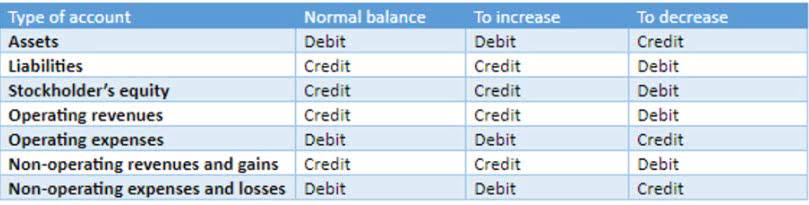
Debit entries in your opening balance equity can be thought of as the financial commitments or obligations you have taken on before starting a new accounting period. Imagine you’re setting up a lemonade stand and you’ve already bought lemons, sugar, and a cooler – these are like your debit entries. One of the most important things you can do to manage opening balance equity is to regularly reconcile and review your accounts. This means comparing your accounting records to your bank statements and other financial documents to ensure that everything is accurate and up-to-date. When it comes to managing opening balance equity, there are a income statement few best practices that small business owners should keep in mind. By following these practices, you can ensure that your accounting records are accurate, compliant with GAAP, and provide you with the information you need to make informed decisions.